


What Is User-Generated Content? A Complete Guide to UGC and Its Benefits

If you’ve ever posted a product review, shared a cafe photo on Instagram, or left a comment on a brand’s Facebook post, congrats—you’ve already contributed to user-generated content. And whether you realize it or not, brands love it.
In today’s crowded digital space, people trust people more than ads. That’s exactly why UGC has become one of the most effective strategies for building credibility, boosting engagement, and driving conversions without sounding salesy.
This guide breaks down what is user-generated content, how it works, why it matters, and how brands actually use it—without the jargon or fluff.
Table of Contents
- What Is User-Generated (UGC) Content?
- Types of User-Generated Content You’ll See Everywhere
- Why User-Generated Content Is So Powerful
- User-Generated Content in Marketing: How Brands Actually Use It
- Benefits of User-Generated Content for Businesses
- How to Encourage User-Generated Content (Without Being Pushy)
- Common Mistakes Brands Make With UGC
- UGC vs Influencer Content: What’s the Difference?
- Is User-Generated Content Right for Your Brand?
- Why User-Generated Content Should Be Included in Your Digital Marketing
What Is User-Generated (UGC) Content?
User-generated content (UGC) refers to any form of content—photos, videos, reviews, testimonials, social posts, blogs, or comments, created by real users instead of the brand itself.
In simple terms, it’s content made about your brand, not by your brand.
This content can appear on:
- Social media platforms
- Review sites
- Blogs and forums
- Brand websites
- Online marketplaces
When people search for what is user-generated content, they’re usually trying to understand why brands rely so heavily on customer-created posts, and the answer is trust.
Types of User-Generated Content You’ll See Everywhere
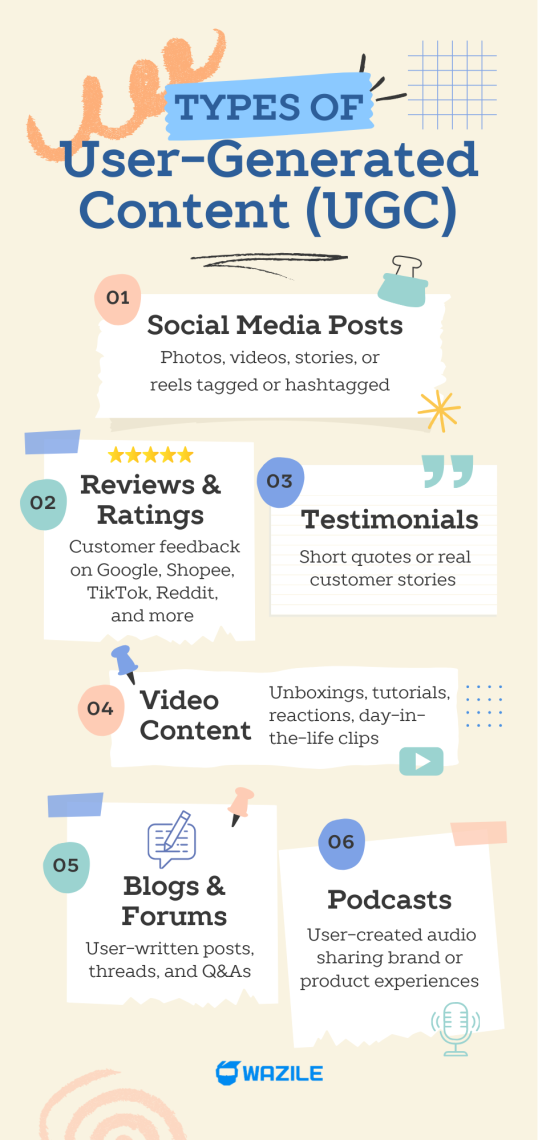
UGC isn’t limited to one format. In fact, the more diverse it is, the more powerful it becomes.
● Social Media Posts
Photos, videos, stories, or reels featuring a product or service—usually tagged or hashtagged.
● Reviews and Ratings
Written feedback on Google, Shopee, Lazada, TikTok, Amazon, Yelp, Facebook, or Reddit.
● Testimonials
Short quotes or longer stories explaining how a product helped someone.
● Video Content
Unboxing videos, tutorials, reaction clips, or “day in the life” content.
● Blog Posts and Forums
User-written articles, Reddit threads, or Q&A discussions.
● Podcasts
User-created audio content discussing products, brands, or experiences—often shared via streaming platforms or social media.
These user-generated content examples are often repurposed across websites, ads, emails, and landing pages.
Why User-Generated Content Is So Powerful
People don’t wake up wanting to be marketed to. They want proof.
Here’s why UGC delivers that better than traditional campaigns.
1. Builds Trust Faster
Seeing real customers use a product lowers skepticism. It answers the silent question: “Will this work for me?”
2. Feels Relatable
UGC shows products in real-life situations—not staged shoots. That relatability makes a big difference.
3. Drives Engagement
People are more likely to like, comment, and share content created by others. Social platforms reward that engagement with more reach.
4. Supports Buying Decisions
Reviews and testimonials directly influence conversions, especially for first-time buyers.
These are just some of the key benefits of user-generated content, and they apply across almost every industry.
User-Generated Content in Marketing: How Brands Actually Use It
UGC isn’t just for social feeds. Smart brands integrate it across their entire marketing ecosystem.
1. Website Content
Many brands feature customer photos, reviews, and testimonials on:
- Homepages
- Product pages
- Landing pages
This helps increase time on site and improve conversions.
2. Social Media Marketing (SMM)
UGC helps keep social feeds fresh without the need for constant content creation. By reposting tagged photos, videos, and stories, brands maintain consistency and boost engagement.
If you want to grow your brand authentically, explore social media marketing strategies that leverage user-generated content.
3. Paid Ads
Ads that use content made by real users often work better than regular ads because they feel more natural and less like a sales pitch.
4. Email Campaigns
Including real reviews or user photos in emails boosts click-through rates and trust.
5. Product Development
Brands also use feedback from UGC to improve products and services.
Benefits of User-Generated Content for Businesses
Let’s break down the biggest advantages in a more practical way.
1. Cost-Effective Content Creation
UGC reduces the need for expensive photo shoots and video production.
2. Increased Brand Credibility
Real experiences speak louder than branded claims.
3. Higher Conversion Rates
Shoppers feel more confident buying when they see others already using the product.
4. Stronger Community Building
Featuring customer content makes people feel seen and valued.
5. Better SEO Signals
Fresh content, natural language, and reviews help search engines understand relevance, especially when aligned with user-generated content marketing strategies.
Related: What is SEO? A Handy Guide to Search Engine Optimization
How to Encourage User-Generated Content (Without Being Pushy)
You can’t force UGC, but you can make it easier for people to create it.
1. Create Share-Worthy Experiences
Great products and services naturally inspire sharing.
2. Use Hashtags and Tags
Branded hashtags make it easier to collect content.
3. Run Contests or Features
People love being featured on brand pages or websites.
4. Ask at the Right Moment
Request reviews after a positive experience—not randomly.
5. Engage With User Content
Like, comment, and repost. Interaction encourages more participation.
Common Mistakes Brands Make With UGC
User-generated content works best when it feels real and well-managed. When handled poorly, it can lose impact or even hurt brand trust. Here are some common mistakes to avoid.
1. Over-Editing User Content
UGC is effective because it looks authentic. Heavy filters, scripted captions, or overly polished visuals can make it feel like an ad. Light edits are fine, but keeping the content natural helps it perform better.
2. Not Asking for Permission
Reposting user content without consent can damage trust and lead to issues. A quick message asking for permission shows respect and protects your brand when using user-generated content in marketing.
3. Ignoring Negative Feedback
Not all UGC will be positive. Deleting criticism can backfire. Addressing negative feedback professionally shows transparency and helps improve your products or services.
4. Treating UGC as a One-Time Tactic
This marketing tactic shouldn’t be a one-off campaign. Ongoing engagement and consistent use make user-generated content more effective and help build long-term relationships with your audience.
UGC vs Influencer Content: What’s the Difference?
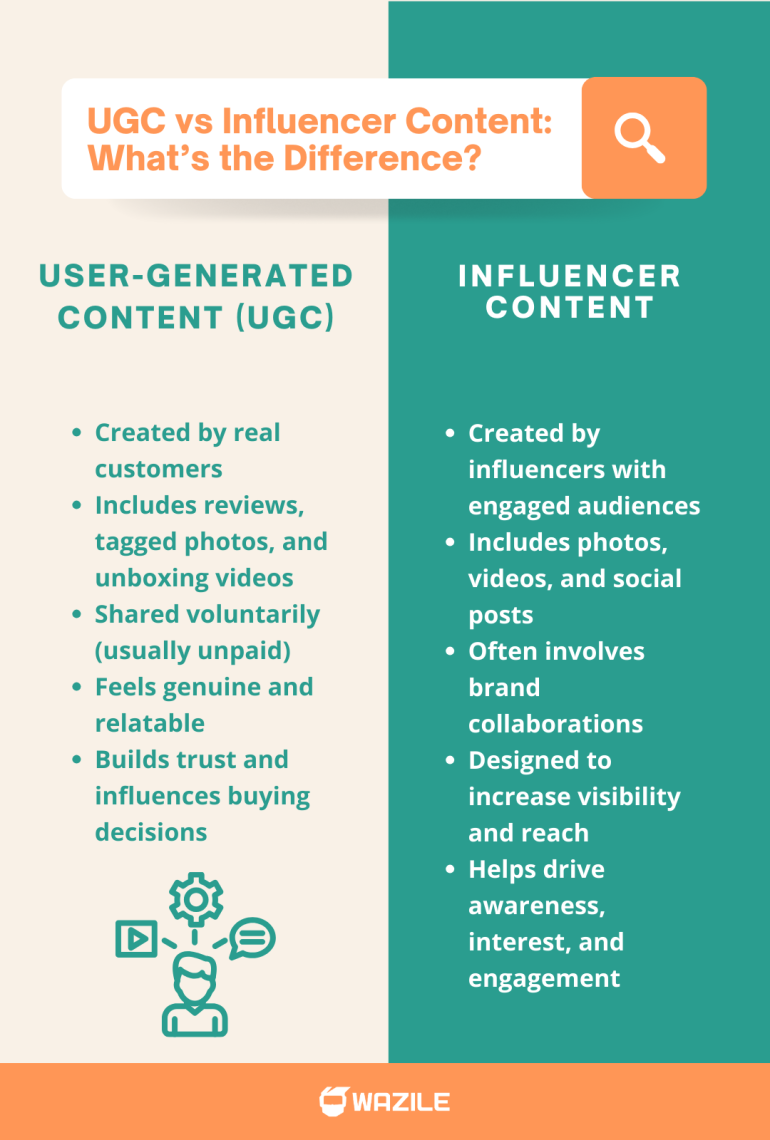
Both user-generated content and influencer content come from real people, but they play different roles in marketing.
● UGC
Reviews, tagged photos, and unboxing videos are all examples of UGC created by real customers. Since this content is typically shared voluntarily and not paid for, it feels genuine and relatable. That authenticity plays a big role in building trust and influencing purchase decisions.
● Influencer Content
Influencer content includes photos, videos, and posts created by influencers who have built an engaged audience in a specific niche. This content is often created in collaboration with brands, but it can also come from organic product use or gifting.
Because influencers speak directly to their followers, this type of content helps increase brand exposure, spark interest, and encourage engagement, especially during campaigns or product launches.
Many brands use both together. Influencer content helps attract attention, while user-generated content in marketing helps build credibility and confidence once people start engaging with the brand.
Is User-Generated Content Right for Your Brand?
If your business values:
- Authenticity
- Community
- Trust-based marketing
Then yes—UGC is worth investing in.
From small businesses to global brands, user-generated content adapts easily to different goals and budgets.
Why User-Generated Content Should Be Included in Your Digital Marketing
Understanding user-generated content goes beyond just its definition—it’s about recognizing how people actually make decisions online. In a world flooded with ads, consumers trust real experiences shared by other users much more. That’s why UGC continues to stand out in digital marketing.
It feels authentic, builds credibility, and helps brands connect with their audience on a more human level. When done right, user-generated content drives stronger engagement, boosts conversions, and fosters long-term loyalty. Ultimately, it works because it puts your customers at the heart of your brand story.
Need a marketing boost that works? Explore digital marketing services in the Philippines tailored for you.