

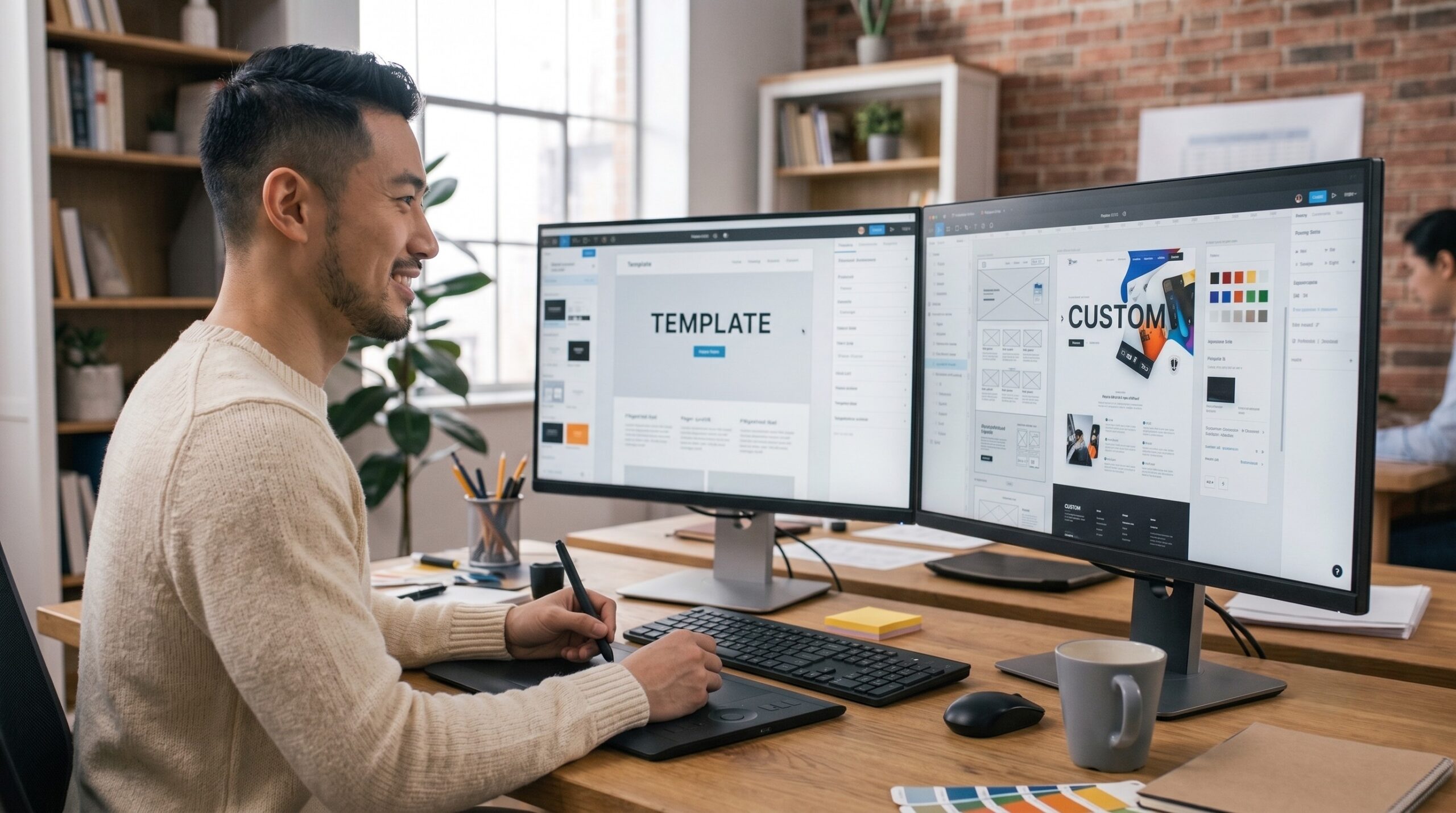

Choosing between custom website design vs template design is one of the first decisions businesses make when building a website. While both options can create a functional online presence, they differ in flexibility, branding, scalability, and long-term value.
A template website is often faster and more affordable to launch, making it suitable for startups or businesses with simple website needs. In contrast, custom website design is built around a business’s unique goals, branding, and functionality, offering greater control over user experience, search engine optimization (SEO), and future growth.
For businesses planning to invest in a strong online presence, working with an experienced custom web design agency ensures your site supports long-term digital success rather than just getting online quickly.
Key Takeaways: Custom Website Design vs. Template Design
Quick Summary: Custom website design builds a site from scratch for maximum SEO control, unique branding, and long-term scalability. Template design uses pre-made layouts for low upfront costs and rapid deployment, ideal for early-stage startups.
- Upfront vs. Long-Term Value: Templates offer low initial costs ($500–$2,500) but higher long-term maintenance. Custom sites require higher upfront investment ($4,000+) but deliver far greater ROI through scalability and durability.
- Performance & SEO: Custom code eliminates template bloat, improving Core Web Vitals and load speeds by 1.5–3 seconds on average—a key Google ranking factor.
- Branding & UX: Custom design creates tailored user journeys that drive conversions, whereas templates rely on shared layouts used by thousands of competitors.
- Scalability: Modifying templates as you grow often causes plugin conflicts or requires full rebuilds. Custom architectures scale seamlessly with custom APIs, CRMs, and e-commerce additions.
Table of Contents
- What is Custom Website Design?
- What is Template Website Design?
- Custom Website Design vs. Template Design: A Side-by-Side Comparison
- Which Option is Better for SEO?
- Website Performance and Speed
- How Custom Website Design Supports Future Business Growth
- How Content Management Differs Between Custom and Template Websites
- Comparing the Cost of Custom Website Design vs. Template Design
- Which Businesses Benefit Most From Custom Website Design?
- When is a Template Website the Better Choice?
- Final Thoughts: Which Website Design Should You Choose?
- Frequently Asked Questions About Custom Website Design vs. Template Design
What is Custom Website Design?
Custom website design is the process of creating a website from scratch instead of relying on premade templates. Every page, feature, and design element is tailored to match a company’s branding, goals, and target audience.
Unlike templates that come with predefined layouts, these websites are designed around the user’s journey. This allows businesses to create a more engaging experience while integrating features that support operations, marketing strategies, and future expansion.
Many businesses invest in custom web design services because they want greater control over functionality, navigation, and performance instead of adjusting their brand to fit the limitations of an existing template.
Benefits of Custom Website Design
A custom website offers advantages that extend beyond aesthetics. Since every element is designed specifically for the business, it becomes easier to improve usability, optimize performance, and support future expansion.
Some of the key benefits include:
- A unique design that strengthens brand identity
- Better user experience and navigation
- Greater flexibility for future updates
- Faster website performance when properly optimized
- Improved scalability
- Easier integration with business tools and third-party software
- Stronger foundation for SEO
These benefits of custom website design for businesses make it a worthwhile investment for companies focused on long-term growth rather than short-term convenience.
What is Template Website Design?
Template website design uses ready-made layouts that can be customized with your own content, colors, images, and branding. Many website builders and WordPress website development platforms provide thousands of templates that allow businesses to launch websites quickly.
For startups and small businesses with limited budgets, templates can be an excellent starting point. They eliminate much of the design work and often require little technical knowledge to manage.
NOTE: Because templates are created for a broad audience, they may not always provide the flexibility needed as business requirements become more complex.
Custom Website Design vs. Template Design: A Side-by-Side Comparison
| Feature | Custom Website Design | Template Website Design |
|---|---|---|
| Design | Built specifically for your brand with a unique look and feel. | Uses a pre-designed layout that can be customized. |
| Customization | Highly flexible with tailored features and functionality. | Limited to the capabilities of the chosen template and plugins. |
| Branding | Fully reflects your business identity and customer experience. | Branding can be customized but may resemble other websites using the same template. |
| SEO | Greater control over technical SEO, site structure, page speed, and schema markup. | Can be SEO-friendly but may have limitations depending on the template. |
| Performance | Optimized with only the necessary code and features. | May include unnecessary code that can affect loading speed. |
| Scalability | Easy to expand with new pages, features, and integrations as your business grows. | Can become restrictive as business needs become more complex. |
| Content Management | Can be built with a custom CMS or platforms like WordPress for easier management. | Typically uses a built-in CMS or website builder with predefined options. |
| Development Time | It takes longer because the website is designed and developed from scratch. | Faster to launch using an existing template. |
| Cost | Higher upfront investment with greater long-term value. | Lower initial cost, making it suitable for smaller budgets. |
| Best For | Growing businesses, established companies, eCommerce stores, and organizations with unique requirements. | Startups, personal websites, portfolios, small businesses, and temporary projects. |
Which Option is Better for SEO?
One of the biggest differences in custom website design vs. template design is how much control businesses have over technical SEO.
A well-built SEO-friendly website design makes it easier for search engines to crawl, understand, and rank web pages while providing visitors with a smooth browsing experience.
With custom development, developers can optimize nearly every technical aspect of the website, including:
- Clean and efficient code
- Fast loading speeds
- Mobile responsiveness
- Schema markup
- Optimized URL structure
- Internal linking
- Core Web Vitals
Template websites can also perform well in search results. However, some themes include unnecessary code or features that slow down website performance.
Businesses aiming for sustainable organic growth often invest in SEO-focused web development because technical optimization is built into the architecture from day one, rather than patched on later.
Website Performance and Speed
Website speed plays a decisive role in both user retention and search rankings. According to landmark research published on Think with Google, the probability of a visitor bouncing increases by 32% as page load time goes from 1 to 3 seconds.
Custom websites achieve an optimal Largest Contentful Paint (LCP) score under 1.8 seconds—well within Google’s Core Web Vitals threshold of 2.5 seconds—because they operate on lean, bespoke code bases without extraneous scripts.
In contrast, pre-built template websites frequently bundle unused CSS/JavaScript and heavy third-party plugins that bloat initial loading times. A faster, custom-built site keeps visitors engaged, improves conversion rates, and ensures strong organic search visibility.
How Custom Website Design Supports Future Business Growth
A business website should be able to grow alongside the company. As customer expectations evolve and operations expand, your website may need additional pages, eCommerce capabilities, customer portals, booking systems, multilingual support, or integrations with CRM and other business tools. Choosing custom website design makes it much easier to add these features without being restricted by the limitations of a pre-built template.
Because custom websites are built with scalability in mind, they can adapt to changing business needs while maintaining consistent branding, performance, and user experience. Instead of rebuilding your website as your business grows, new functionality can be incorporated more efficiently, helping save time and reduce long-term development costs.
This flexibility also supports long-term SEO efforts. As your website expands with new content, landing pages, and services, it can continue following a well-organized site structure that benefits both users and search engines.
For businesses planning sustained growth, investing in custom website design services provides a scalable foundation that can evolve alongside changing goals and customer expectations.
How Content Management Differs Between Custom and Template Websites
One important factor to consider when comparing custom website design vs. template design is how easy it is to manage your website after it goes live. Whether you’re publishing blog posts, updating service pages, or adding new products, an efficient content management system (CMS) can save time and reduce reliance on developers.
Both custom and template websites can be built through CMS website development, giving businesses the ability to update content without advanced technical skills. Platforms like WordPress website development are especially popular because they combine user-friendly content management with the flexibility to support both template-based and fully custom websites.
The main difference lies in flexibility. Template websites generally depend on the capabilities of the chosen theme, which can limit how content is displayed, organized, or customized. While plugins can extend functionality, they may also introduce compatibility or maintenance challenges over time. In contrast, custom websites allow the CMS to be tailored to your specific workflow, making it easier to organize content, add new features, and adapt as your business grows.
If your business expects to publish content regularly or expand its website over time, a custom CMS solution can provide greater control while making ongoing website management more efficient.
Comparing the Cost of Custom Website Design vs. Template Design
Budget is often one of the biggest deciding factors. When comparing custom website design and template design, the upfront price is often one of the biggest deciding factors. Template websites generally require a smaller initial investment because the design and core functionality are already built. Custom websites, however, involve more planning, design, and development, resulting in a higher upfront cost.
While templates may seem like the more budget-friendly option, it’s important to consider the long-term value. As your business grows, you may need additional features, integrations, or design changes that can increase maintenance costs or even require a complete website redesign. A custom website is built with scalability in mind, making it easier to adapt to changing business needs over time.
| Factor | Custom Website Design | Template Website Design |
| Initial Cost | Higher upfront investment due to custom planning, design, and development. | Lower upfront cost using pre-designed themes or templates. |
| Customization Costs | Included during development and tailored to business needs. | Additional customization may require premium plugins or developer assistance. |
| Maintenance | Easier to maintain with features built specifically for your website. | Plugin and theme updates may cause compatibility issues over time. |
| Scalability | Designed to accommodate future growth and new functionality. | May require significant modifications or a complete redesign as needs evolve. |
| Long-Term Value | Strong return on investment through flexibility, performance, and scalability. | Lower initial cost but may result in higher long-term expenses due to limitations. |
| Best For | Businesses planning long-term growth and a unique online presence. | Startups, small businesses, or projects with simple website requirements and limited budgets. |
Which Businesses Benefit Most From Custom Website Design?
While every business has different needs, custom websites are especially beneficial for organizations planning long-term growth.
This includes:
- Corporate businesses
- Professional service providers
- Healthcare organizations
- Educational institutions
- Manufacturing companies
- Hotels and hospitality businesses
- eCommerce stores
- Businesses requiring custom workflows
For these organizations, the benefits of custom website design for businesses often outweigh the lower upfront cost of template solutions.
When is a Template Website the Better Choice?
Template websites remain an excellent option for businesses with straightforward website requirements.
They’re particularly suitable for startups, personal portfolios, event websites, temporary marketing campaigns, and businesses testing a new concept before making a larger investment.
Choosing a template doesn’t necessarily mean sacrificing quality. The key is selecting a solution that aligns with both current needs and future goals.
Final Thoughts: Which Website Design Should You Choose?
When comparing custom website design vs. template design, the right choice depends on your business goals, budget, and long-term plans.
Template websites offer a practical solution for businesses that need a professional website quickly and affordably. However, organizations looking to stand out, improve search visibility, and support future growth often gain greater long-term value from a custom-built website that can evolve with their needs.
A website is a core business asset that directly impacts credibility, user experience, and conversion rates. Partnering with a skilled custom website design team helps you build a scalable digital presence that reflects your brand, ranks on search engines, and grows with your revenue.
Frequently Asked Questions About Custom Website Design vs. Template Design
Is custom website design better than template design?
Custom website design is better for businesses seeking long-term scalability, unique branding, and complete technical SEO control. Templates are better for early-stage startups needing a fast, budget-friendly launch with basic functionality.
Can template websites rank on Google?
Yes. A template website can rank well when optimized properly. However, custom websites usually provide greater control over technical SEO and overall performance.
Can WordPress be used for fully custom websites?
Yes, WordPress supports fully custom website development. Developers use WordPress as a headless or custom-coded content management system (CMS) without relying on off-the-shelf pre-made themes or heavy page builders.
Is custom website design worth the initial investment?
Yes, custom website design is worth the investment for growing businesses that rely on their website to generate leads, process sales, or scale operations. While upfront costs are higher, long-term costs are lower due to better durability and performance.
Ready to build a website that supports long-term growth? Discover our professional custom web design services for businesses.