

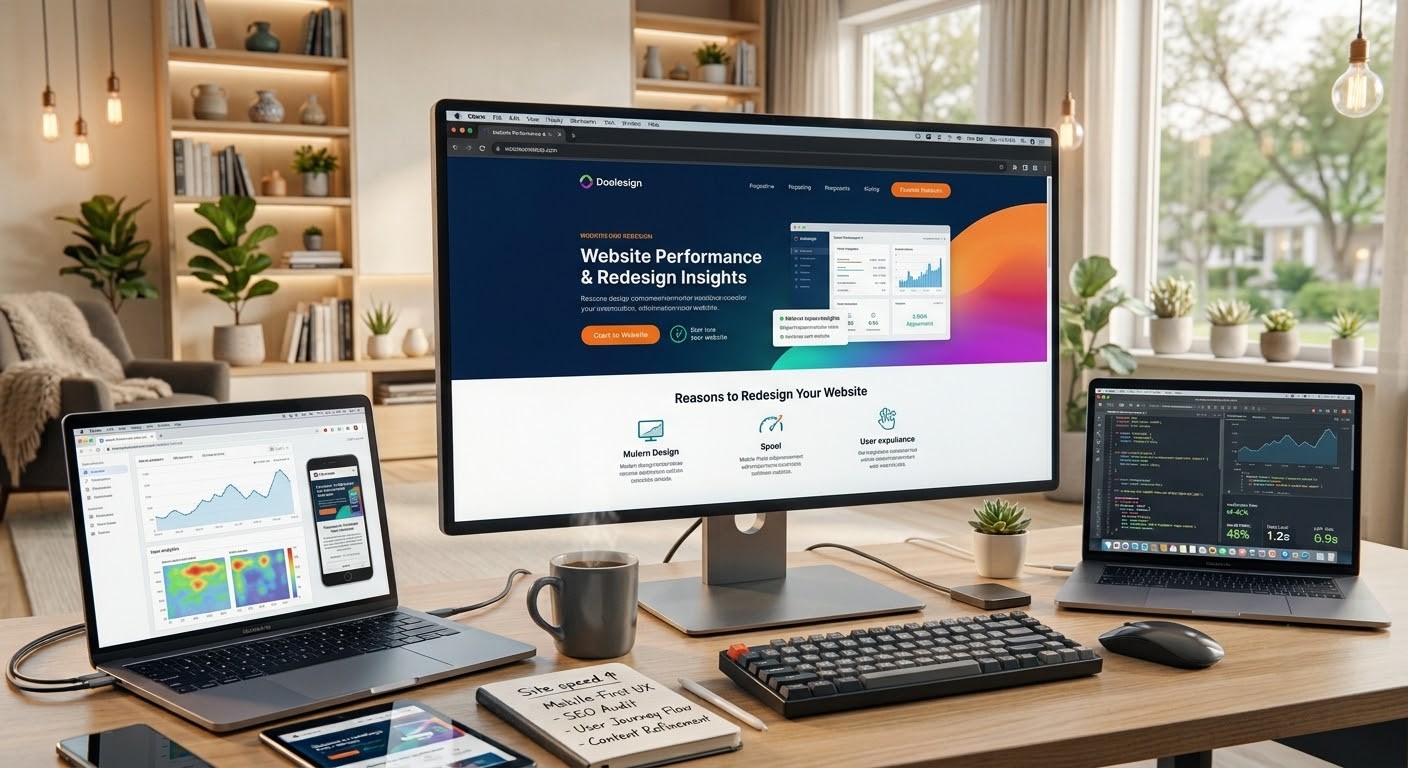

Your website is often the first interaction potential customers have with your business. It should present your brand professionally, build trust, and encourage visitors to take action. If your website no longer reflects your business goals or current digital standards, it may be time for a website redesign.
More than just a visual refresh, a website redesign improves user experience, strengthens search engine visibility, enhances security, and helps convert more visitors into customers. Whether the goal is to generate more leads, increase online sales, or improve brand credibility, redesigning your website can support long-term business growth.
Related: Website Redesign or Rebuild? Which One Do You Need?
Key Takeaways: When Should You Redesign Your Website?
- A website redesign improves user experience, SEO, website performance, and security, not just your site’s appearance.
- Common signs you need a redesign include an outdated design, slow loading speeds, poor mobile responsiveness, difficult navigation, and declining conversions.
- Optimizing your website’s structure, page speed, and content during a redesign can improve search visibility and organic traffic.
- Your website should evolve alongside your branding, services, and marketing strategy to remain relevant and competitive.
- Reviewing your website every two to three years helps ensure it continues to meet user expectations and business goals.
Table of Contents
- Your Website Looks Outdated
- Your Website Isn’t Mobile-Friendly
- Your Website Loads Too Slowly
- Visitors Struggle to Navigate Your Website
- Your Website Isn’t Optimized for Search Engines
- Your Website Has Outdated Security
- Your Branding or Business Has Changed
- Your Website No Longer Supports Your Marketing Strategy
- Your Website Isn’t Generating Leads or Sales
- Your Content is Outdated or Difficult to Manage
- Your Competitors Have Better Websites
- Your Website Doesn’t Meet Modern User Expectations
- How Often Should You Redesign Your Website?
- Is It Time for a Website Redesign?
- Frequently Asked Questions About Website Redesign
1. Your Website Looks Outdated
First impressions matter. Visitors often decide within seconds whether they trust a business, and an outdated website can create the impression that a company is no longer active or reliable. A modern website redesign refreshes your visual identity while maintaining brand consistency. Updated layouts, typography, colors, and high-quality images create a professional appearance that encourages visitors to explore your website further.
2. Your Website Isn’t Mobile-Friendly
Most internet users now browse websites on their smartphones. If your website isn’t responsive, visitors may struggle to read content, navigate pages, or complete inquiries. Responsive web design automatically adapts to different screen sizes, providing a seamless experience across desktops, tablets, and mobile devices. Since Google uses mobile-first indexing, mobile responsiveness also plays an important role in search rankings.
Related: What Is Mobile-First Design? A Guide to Optimizing Mobile User Experience
3. Your Website Loads Too Slowly
Website speed directly affects user experience and conversions. Visitors expect pages to load quickly, and even a short delay can increase bounce rates. A website redesign can improve loading speed through several performance enhancements, including:
- Compressing and optimizing images
- Removing unnecessary plugins and scripts
- Cleaning outdated code
- Improving browser caching
- Upgrading to faster hosting when needed
A faster website keeps visitors engaged and supports better SEO performance.
4. Visitors Struggle to Navigate Your Website
Even a visually appealing website can lose customers if visitors cannot find the information they need. Confusing menus, inconsistent page layouts, and poor navigation often result in frustrated users leaving the site. Improving navigation helps visitors locate products, services, pricing, contact information, and other important pages more easily. A well-organized website also encourages users to spend more time exploring your content.
5. Your Website Isn’t Optimized for Search Engines
A website should be easy for both users and search engines to understand. If your website has poor visibility on Google, outdated SEO practices could be limiting your online reach. Redesigning your website provides an opportunity to improve technical and on-page SEO while implementing professional SEO services to improve search rankings, including:
- Better site architecture
- Optimized page titles and meta descriptions
- Internal linking
- Mobile responsiveness
- Faster page speed
- Structured data (schema markup)
- High-quality, helpful content
These improvements help search engines better understand your website while making it easier for potential customers to discover your business online.
Related: How Web Development Affects SEO (And Why It Matters for Your Website)
6. Your Website Has Outdated Security
Cybersecurity has become increasingly important for businesses of all sizes. Older websites often rely on outdated software, themes, or plugins that make them vulnerable to hacking, malware, and data breaches.
Related: What is Website Security? How It Works, Benefits, Vulnerabilities, Threats, and More
Redesigning your website provides an opportunity to strengthen its security by implementing HTTPS, updating your content management system, securing login credentials, and keeping software up to date. These improvements help protect both your business and your visitors.
7. Your Branding or Business Has Changed
Businesses naturally evolve over time. You may have introduced new products, expanded your services, changed your logo, or updated your brand messaging. If your website still reflects your old identity, it can create confusion among potential customers. Your website should reflect your current business while maintaining a consistent and professional brand image across all digital channels.
8. Your Website No Longer Supports Your Marketing Strategy
An effective website supports every aspect of your digital marketing strategy. Whether you’re investing in SEO, paid advertising, email marketing, or social media marketing services that drive website traffic, it should help convert visitors into customers. Improving your website can better support marketing goals through stronger calls to action, optimized landing pages, lead generation forms, and conversion-focused layouts.
9. Your Website Isn’t Generating Leads or Sales
A website should produce measurable business results. If traffic is increasing but inquiries, bookings, or sales remain low, your website may not be effectively guiding visitors toward conversion. Reviewing user behavior and redesigning key pages can improve the customer journey and encourage more visitors to complete desired actions, such as requesting a quote, making a purchase, or contacting your business.
10. Your Content is Outdated or Difficult to Manage
Content plays a major role in attracting visitors and building trust. However, outdated information, broken pages, and difficult-to-update content management systems can make maintaining your website challenging. Reorganizing your website’s content and upgrading to a modern content management system (CMS) makes future updates faster, more efficient, and easier to manage.
11. Your Competitors Have Better Websites
Your website doesn’t exist in isolation. Potential customers often compare multiple businesses before making a decision. If competitors offer a faster, more attractive, and easier-to-use website, they may gain an advantage before a conversation even begins. Regularly evaluating competitor websites can reveal opportunities to improve your own design, functionality, and customer experience, helping your business remain competitive in your industry.
12. Your Website Doesn’t Meet Modern User Expectations
Today’s users expect websites to be fast, accessible, secure, and easy to use. They also expect features like intuitive navigation, clear calls to action, responsive design, and accessible content. A website redesign helps align your website with current web standards while improving usability for all visitors, including people using assistive technologies. These improvements enhance the overall user experience and can positively impact search performance.
How Often Should You Redesign Your Website?
There isn’t a fixed timeline for redesigning a website, but many businesses benefit from evaluating their website every two to three years. Technology, customer behavior, and search engine algorithms continue to change, making regular updates essential for staying competitive.
You may want to consider a website redesign sooner if:
- Your website isn’t mobile-friendly.
- Pages load slowly.
- Search rankings have declined.
- Your branding has changed.
- Security issues are becoming more frequent.
- Visitors aren’t converting into customers.
Regular website audits can help identify areas for improvement before they begin affecting your business performance.
Is It Time for a Website Redesign?
Your website should be an asset that helps your business grow, not a barrier that holds it back. From creating a positive first impression to improving search visibility and increasing conversions, a well-designed website plays an important role in your overall online success.
If your website is outdated, difficult to navigate, slow to load, or no longer delivering the results you want, it may be time to invest in a redesign. Regularly evaluating your website’s performance ensures it continues to meet your business goals while providing visitors with a seamless online experience.
Frequently Asked Questions About Website Redesign
What is a website redesign?
A website redesign is the process of updating a website’s design, structure, functionality, and content to improve user experience, search engine visibility, security, and overall business performance.
How do I know if I need a website redesign?
Common signs include an outdated design, slow loading speeds, poor mobile responsiveness, declining search rankings, security vulnerabilities, outdated content, and low conversion rates.
Will a website redesign improve SEO?
Yes. A properly planned website redesign can improve page speed, mobile usability, website structure, content organization, metadata, and technical SEO, all of which contribute to better search visibility.
How long does a website redesign take?
The timeline depends on the website’s size and complexity. A small business website may take several weeks, while larger custom websites may require several months.
How often should a website be redesigned?
Most businesses should review their website every two to five years or whenever significant changes occur in their branding, technology, customer expectations, or marketing strategy.
Is your outdated website holding your business back? Get started with professional custom web design services in the Philippines today.
Last Updated: August 2026
First Published: March 9, 2018