


If you’re planning to start an online business in the Philippines, Shopify is one platform you should seriously consider. From local startups and SMEs to fast-growing brands, Shopify has become one of the most trusted ecommerce platforms for selling online—both locally and globally.
In this guide, we’ll break down everything you need to know about Shopify Philippines, from setup and payments to pricing, marketing, and long-term growth.
Table of Contents
- What is Shopify?
- What Does Shopify Do?
- Why Should You Choose Shopify for Your Website?
- How to Set Up a Shopify Store in the Philippines
- Selling Online in the Philippines: Key Tips
- Shopify Payment Gateways in the Philippines
- Popular Payment Methods in the Philippines
- Shopify Plan Pricing in the Philippines
- Shopify Plans Explained: Choosing the Right Fit for Your Business
- How to Maintain a Shopify Store?
- Which Marketing is Best for Shopify Store?
- FAQs About Shopify: Your Top Questions Answered
What is Shopify?
Shopify is a cloud-based ecommerce platform that allows you to create, manage, and scale an online store without needing advanced technical skills. It provides all the essential tools—hosting, design, payments, inventory, and marketing—so you can focus on growing your business instead of worrying about the tech side.
For Filipino entrepreneurs, this platform offers flexibility, scalability, and access to both local and international markets.
What Does Shopify Do?
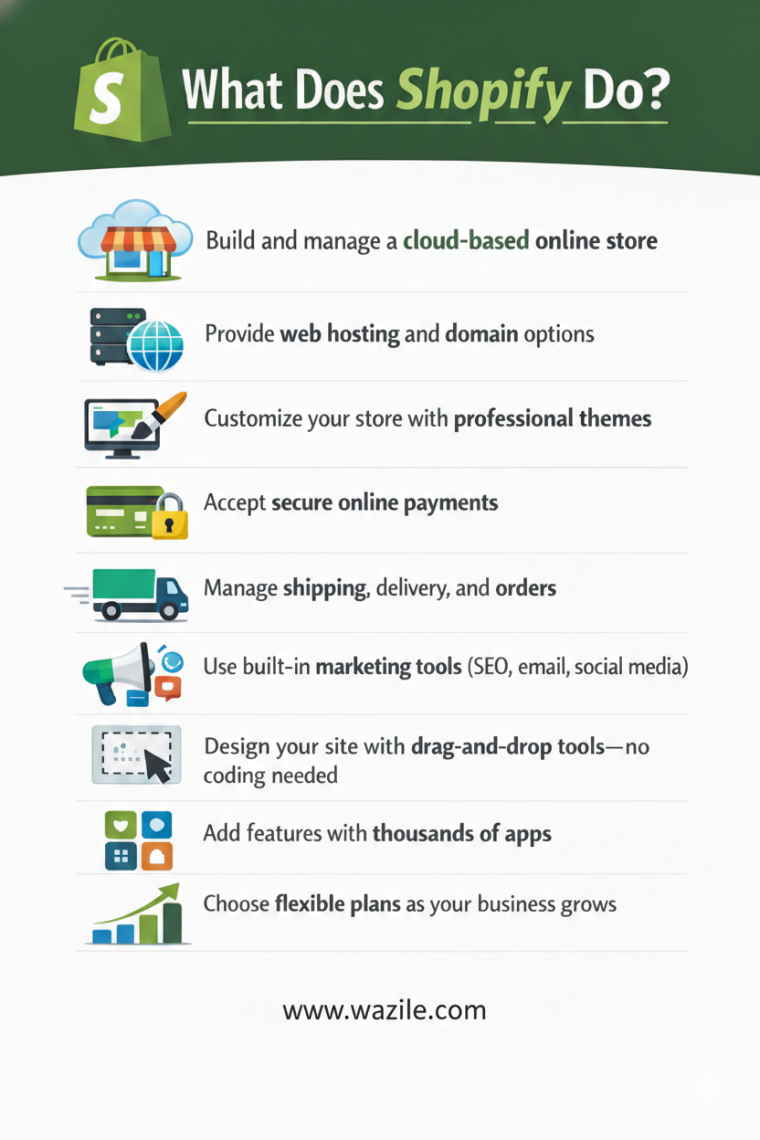
If you’re new to ecommerce, here’s a simple breakdown of what Shopify helps you do:
- Build and manage a cloud-based online store
- Provide web hosting and domain options
- Customize your store with professional themes
- Accept secure online payments
- Manage shipping, delivery, and orders
- Use built-in marketing tools (SEO, email, social media)
- Design your site with drag-and-drop tools—no coding needed
- Add features with thousands of apps
- Choose flexible plans as your business grows
In short, Shopify acts as your all-in-one ecommerce system.
Why Should You Choose Shopify for Your Website?
There are several reasons why you should choose Shopify. But these are some of the most notable reasons to keep in mind:
- Beginner-friendly: Easy to use even without technical experience
- Scalable: Works for small stores and large, high-volume businesses
- Reliable: Secure hosting, automatic updates, and strong performance
- Well-supported: 24/7 customer support and a massive app ecosystem
Related: Why Use Shopify for Your Website: 8 Practical Reasons
TIP: If you want to launch fast and scale confidently, Shopify is a solid choice.
How to Set Up a Shopify Store in the Philippines
1. Choose a Niche
Before setting up your Shopify store, you need to choose a niche that you want to focus on. This could be anything from fashion and beauty to electronics and gadgets. Choose a niche that you are passionate about and has demand (or at least has a potential for demand) in the Philippines.
2. Register Your Business
Register your business with:
- DTI (sole proprietorship)
- SEC (corporation or partnership)
- BIR (for tax compliance)
This builds trust with customers and payment providers.
3. Choose a domain name
Select a domain name that’s easy to remember and reflects your brand. You can buy a domain directly through Shopify or connect one from a third-party provider.
Related: What is a Web Domain? Key Things You Should Know
4. Customize Your Theme
Choose a theme that suits your niche and customize it to represent your brand. You can choose from free and paid themes in the Shopify Theme Store or hire a Shopify web designer in the Philippines to create a custom theme for you.
5. Add and Optimize Products
Upload products with:
- Clear titles and descriptions
- SEO-friendly keywords
- High-quality images and videos
This helps your store rank better on search engines and improves conversions..
6. Set Up Payment and Shipping Options
Enable payment and shipping options that Filipinos actually use, including e-wallets, bank transfers, and Cash on Delivery.
Related: 7 Top E-Commerce or Digital Payment Gateways in the Philippines
7. Launch and Promote
Once live, promote your store through social media, search engines, email marketing, and influencer partnerships.
Selling Online in the Philippines: Key Tips
If you’re planning to sell online in the Philippines, it’s important to understand the local market and consumer behavior. Here are some simple tips to help you as you start selling online in the Philippines:
1. Offer Cash on Delivery
While there are various ways to pay online, some customers still opt for cash on delivery as a payment method in the Philippines, so it’s best to offer this as one of the payment methods. Doing so can help you increase sales since you’ll prevent customers (who opt to pay cash on delivery) from pulling out.
2. Localize Your Store
Use familiar language, peso pricing, and locally relevant messaging to build trust.
3. Promote Your Store on Social Media
Social media is a popular marketing channel in the Philippines, which is also why social media marketing plays a significant role in growing businesses in the Philippines, especially small businesses. Promoting your store on Facebook, Instagram, TikTok and other social media platforms can help you to reach a wider audience and at the same time, give you the liberty to choose or target the right audience you want to market your products and services to.
Related: Why Social Media Marketing is Important for Businesses in the Philippines
Shopify Payment Gateways in the Philippines
Payment gateways are an essential component of any ecommerce store, as they allow businesses to securely process online transactions. Here are some of the best payment gateways available for Shopify users in the Philippines:
- PayPal – trusted for local and international payments
- DragonPay – supports bank transfers and OTC (over-the-counter) payments
- GCash – widely used mobile wallet
- PayMongo – popular local gateway with easy Shopify integration
- 2Checkout – ideal for international sales
- Stripe – global gateway with secure payment processing
Note: Always consider fees, ease of integration, and customer preference when choosing a gateway.
Popular Payment Methods in the Philippines
In addition to payment gateways, it’s important to offer customers a variety of payment methods to ensure a seamless and convenient checkout process. Doing so lets your business cater to the diverse payment preferences of customers in the Philippines, leading to increased customer satisfaction and higher sales.
Here are some of the best payment methods to use for your Shopify store in the Philippines:
Credit and Debit Cards
Accepting credit and debit card payments is a must for any ecommerce store. Many payment gateways, such as PayPal and Stripe, support credit and debit card payments.
Cash on Delivery (COD)
COD is a popular payment method in the Philippines, especially for online purchases. It allows customers to pay for their order in cash upon delivery, making it a convenient option for those who do not have access to credit or debit cards.
Bank Transfers
Aside from COD, there are also a lot of customers in the Philippines who prefer to pay through bank transfers, as it is a secure and familiar payment method. Payment gateways such as DragonPay, support bank transfers as a payment option.
E-Wallets
E-Wallets are gaining popularity in the Philippines, with options such as GCash and PayMaya becoming more widely used. These digital wallets allow customers to store funds and do purchases online, which makes them a convenient payment method for ecommerce stores.
Shopify Plan Pricing in the Philippines
Shopify used to have three (3) main plans, but now it offers four (4): Basic, Shopify (Grow), Advanced, and Plus—each tailored to fit different business needs as you grow.
| Basic | ₱1,126 / mo. ($19 / mo. billed yearly) |
| Grow | ₱2,903 / mo. ($49 / mo. billed yearly) |
| Advanced | ₱17,728 / mo. ($299 / mo. billed yearly) |
| Plus | ₱136,310 / mo. ($2,300 / mo. billed yearly) |
Note: Pricing may vary based on exchange rates and payment processing fees in the Philippines.
Shopify Plans Explained: Choosing the Right Fit for Your Business
1. Basic Shopify
Perfect for new or small ecommerce businesses just getting started. It includes all the essentials to launch your online store and begin selling:
- Fully hosted website and blog
- Unlimited products
- 24/7 customer support
- Basic reports to track sales and performance
- Manual order creation and discount codes
- Fraud analysis tools
This plan is great if you want a simple yet powerful platform without advanced sales or marketing features.
2. Shopify (Grow Plan)
Designed for growing businesses that are scaling both online and in physical stores. It includes everything in Basic Shopify, plus:
- Professional reports for deeper sales insights
- Abandoned cart recovery to help convert lost sales
- Gift cards to boost promotions and customer loyalty
- More staff accounts for team collaboration
- Better shipping discounts and options
This plan supports businesses ready to expand their marketing efforts and optimize conversions.
3. Advanced Shopify
Ideal for established businesses with high sales volumes and more complex needs. It includes all Shopify features, plus:
- Advanced report builder with customizable reports
- Third-party calculated shipping rates (real-time carrier shipping)
- Lower credit card fees and transaction fees
- Greater API access for integrating with custom apps and tools
- More staff accounts and priority support
Choose this plan if you need sophisticated reporting, shipping flexibility, and want to customize your store’s backend.
4. Shopify Plus
Shopify’s enterprise-level solution for large, fast-growing businesses and high-volume merchants. It offers:
- All Advanced Shopify features, plus enterprise-grade security and scalability
- Dedicated account manager and priority 24/7 support
- Customizable checkout experience
- Access to exclusive APIs and integrations
- Advanced automation tools through Shopify Flow
- Multi-store management and international selling capabilities
Shopify Plus is perfect for brands requiring full control, high performance, and personalized support.
How to Maintain a Shopify Store?
Maintaining a Shopify store goes beyond the initial setup. It requires regular updates, strategic planning, and consistent monitoring to ensure the store runs smoothly and efficiently. Here are key practices to maintain a Shopify store:
1. Make Sure to Update Your Store Regularly
- Update Product Listings
Regularly review and update product descriptions, images, and prices. Ensure all information is accurate and up-to-date to avoid customer confusion and potential sales losses.
- Refresh Content
Keep your content fresh by adding new blog posts, updating banners, and featuring seasonal promotions. This keeps your store dynamic and engaging for repeat visitors.
- Check for Broken Links
Broken links can frustrate customers and negatively impact your SEO. See to that you periodically check for and fix broken links.
2. Monitor Store Performance
Utilize Shopify’s built-in analytics tools to track key metrics such as traffic, conversion rates, and average order value. Analyzing these metrics helps you identify areas for improvement and optimize your store’s performance. You can also encourage and monitor customer feedback. Positive reviews build credibility, while constructive criticism offers insights into areas needing improvement.
3. Manage Your Inventory Efficiently
Keep a close eye on inventory levels to avoid stock-outs or overstocking, and utilize inventory management apps available on Shopify to streamline this process. Additionally, maintain good communication with your suppliers to ensure timely restocking and effectively manage lead times.
4. Enhance Customer Experience
- Optimize Website Speed
Ensure your website loads quickly on both desktop and mobile devices. A slow website can lead to high bounce rates and lost sales.
Related: What is Website Optimization? Benefits and Challenges
- Simplify Navigation
Make sure your store’s navigation is intuitive. Customers should easily find what they’re looking for without getting lost or frustrated.
- Offer Excellent Customer Support
Provide multiple channels for customer support, such as live chat, email, and phone support. Prompt and helpful customer service can significantly enhance customer satisfaction and loyalty.
Which Marketing is Best for Shopify Store?
Effective marketing is crucial for driving traffic and converting visitors into customers. Here are some of the best marketing strategies for a Shopify store in the Philippines:
1. Social Media Marketing
Facebook and Instagram
These platforms are widely used in the Philippines. Utilize Facebook and Instagram ads to reach a broader audience. Regularly post engaging content and interact with your followers to build a community around your brand.
TikTok
With its growing popularity, TikTok can be an excellent platform for reaching younger audiences. Create short, engaging videos that showcase your products and brand personality.
2. Search Engine Optimization (SEO)
Keyword Research
Identify relevant keywords that potential customers are searching for. Use these keywords strategically in your product descriptions, blog posts, and other content.
Quality Content
Produce high-quality, informative content that adds value to your audience. Blog posts, how-to guides, and product reviews can help improve your store’s search engine rankings.
3. Email Marketing
Build a Subscriber List
Encourage visitors to subscribe to your newsletter. Offer incentives such as discounts or exclusive content to grow your subscriber list.
Personalized Campaigns
Send personalized email campaigns to engage with your audience. Segment your email list based on customer behavior and preferences for more targeted marketing.
Related: 9 Benefits of Email Marketing That Every Marketer Shouldn’t Ignore
4. User-Generated Content
User-generated content (UGC) boosts your Shopify store by building trust through authentic customer reviews and testimonials, enhancing engagement with real-life product photos and videos, and increasing visibility as customers share their experiences on social media. This not only provides fresh content and fosters customer loyalty but also can drive higher sales by helping potential buyers visualize your products in use.
5. Pay-Per-Click (PPC) Advertising
Google Ads
Use Google Ads to target specific keywords related to your products. PPC campaigns can drive targeted traffic to your store, helping you reach potential customers actively searching for what you offer.
Retargeting Ads
Implement retargeting ads to re-engage visitors who have previously interacted with your site but didn’t make a purchase. This strategy helps bring back potential customers and increase conversion rates.
Related: What is PPC/Pay Per Click? How It Works, Pros, and Cons
FAQs About Shopify: Your Top Questions Answered
Is Shopify Good for Beginners?
Yes, Shopify is perfect for beginners. It has a user-friendly interface, an easy setup process, and lots of support resources, making it a great choice for anyone new to e-commerce.
How Much Does Shopify Take Per Sale?
Shopify charges transaction fees that vary depending on your pricing plan and payment method (through third-party payment gateways). If you use Shopify Payments, there are no additional transaction fees beyond your payment processing fees. It’s also worth noting that the higher your plan is, the lower the fees will be.
Can I Sell Anything on Shopify?
While Shopify is versatile and supports a wide range of products, there are restrictions on certain products such as alcohol, tobacco, and gambling items. Animals, livestock, pet prescriptions, and certain animal products are also restricted. You must comply with Shopify’s guidelines and local laws regarding prohibited or regulated products.
What Is Better Than Shopify?
The best e-commerce platform for you depends on your specific needs. Alternatives to Shopify include WooCommerce (for WordPress users), BigCommerce, and Magento. Each has its strengths, so consider factors like ease of use, scalability, and customization when choosing a platform.
Why Do So Many Shopify Stores Fail?
Many Shopify stores fail due to inadequate market research, poor product selection, insufficient marketing, and lack of customer engagement. To improve your chances of success, it’s crucial to create a well-thought-out business plan, develop effective marketing strategies, and focus on customer satisfaction.
Shopify is a great platform for entrepreneurs who want to start an online business in the Philippines. With its user-friendly interface, powerful tools, and reliable support, Shopify makes it easy to create and manage an online store. By understanding the local market and consumer behavior, you can optimize your online store for success in the Philippines.
Not sure how to build a Shopify store that actually sells? Get professional Shopify website development services in the Philippines for your growing online business. Contact us today, and we will be glad to assist you!
Last Updated: January 12, 2026
First Published: March 25, 2023